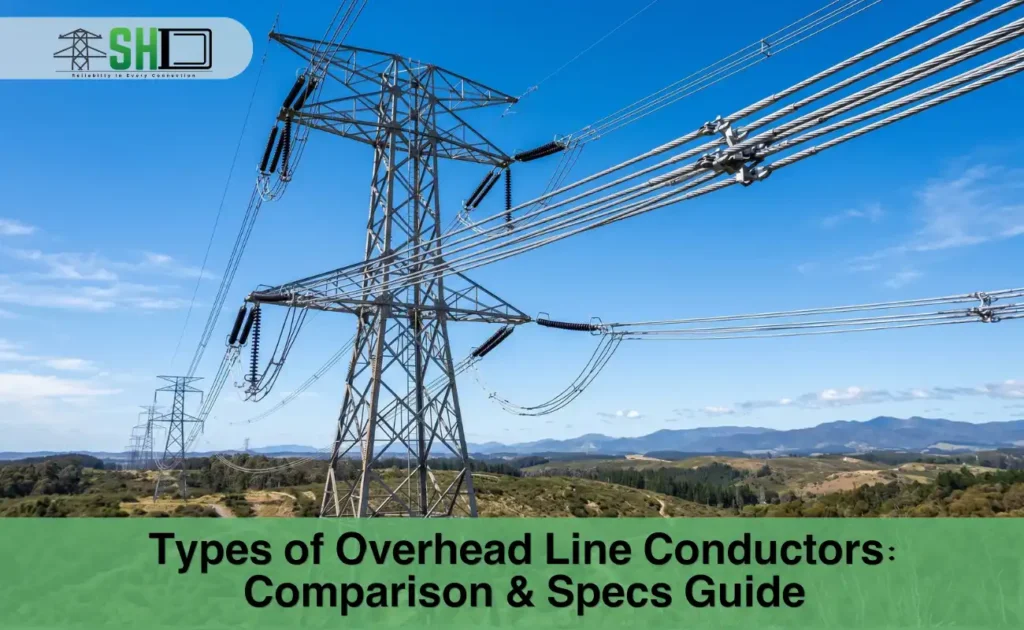
Types of overhead line conductors include AAC, AAAC, ACSR, and ACAR. These different types of conductor are vital for modern power grid transmission. While historical systems relied heavily on heavy copper, modern electrical networks utilize lightweight aluminum to optimize costs and minimize structural sagging. Choosing the right material requires carefully balancing environmental corrosion resistance, mechanical tensile strength, electrical conductivity, and project span lengths to ensure long-term grid reliability.
What are the main types of overhead line conductors?
what is overhead conductor? It is an uninsulated cable, usually strung between transmission towers or poles, that carries electrical power over long distances. Because it is exposed to weather, it must endure mechanical stress, wind load, ice accumulation, and changing temperatures.
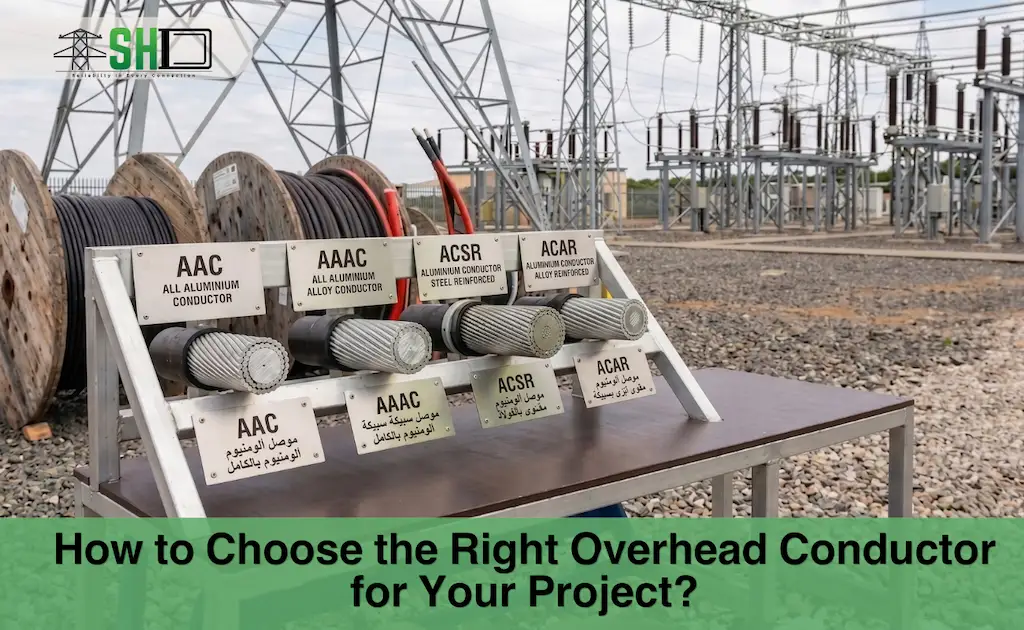
Overhead power systems use several main types of Overhead Line Conductors, chosen for cost, weight, strength, and performance, like corona control; aluminium has largely replaced copper in overhead lines. In the following types of transmission line conductors:
-
AAC (All Aluminium Conductor):
Stranded EC/electrical-grade aluminium; good conductivity (~61% IACS) but relatively lower strength, so mainly for shorter urban distribution spans.
-
AAAC (All Aluminium Alloy Conductor):
Made from aluminium alloy 6201 (Al–Mg–Si); higher strength with ~52.5% IACS conductivity, used more for distribution and favored in coastal areas for corrosion resistance.
-
ACSR (Aluminium Conductor Steel Reinforced):
Aluminium (1350) strands over a steel core (zinc- or aluminized-coated); widely used for transmission/distribution due to improved mechanical strength and reduced sag (steel content may range ~6%–40%).
-
ACAR (Aluminium Conductor Alloy Reinforced):
Aluminium strands over a high-strength aluminium alloy (6201) core; better types of conductor in electrical and mechanical properties than comparable ACSR, suitable for both overhead transmission and distribution.
AAC vs AAAC vs ACSR vs ACAR Detailed Comparison:
AAC, AAAC, ACSR, and ACAR are all types of overhead line conductors used in power transmission and distribution lines, but they differ significantly in their materials, construction, strength, and application suitability. The table below compares the four types of overhead conductors, highlighting their main differences in design features and overall performance criteria.
| Comparison point | AAC (All Aluminum) | AAAC (All Aluminum Alloy) | ACSR (Aluminum Steel Reinforced) | ACAR (Alloy Reinforced Aluminum) |
| Basic components | 99.7% pure aluminum | Aluminum alloy (magnesium and silicon) | Steel core surrounded by aluminum wires | A core made of aluminum alloy, surrounded by pure aluminum. |
| Mechanical resistance | lower than other conductors | Medium to high | Very high (highest durability) | High with light weight |
| electrical connection | Highest conductivity | Slightly less than pure aluminum | Less efficient (due to steel) | Equivalent to pure aluminum and approximately higher than ACSR |
| Corrosion and rust resistance | Excellent | Excellent (best coastal) | Medium (steel prone to rust) | Excellent (no steel) |
| relative weight | Very light | light | Heavier than AAC AAAC | Lightweight relative to its strength |
| Extension distance (sag) | Short distances (high sag) | medium to long distances | Very long distances (low sag) | long distances |
Read More: Function of Insulator in Transmission Line: Types, Specs & Selection.
Required Properties and Materials for Different Types of Overhead Line Conductors:
Types of overhead line conductors rely on carefully chosen materials to meet electrical performance and mechanical durability needs across different operating conditions. The common conductor materials: copper, aluminum, steel, aluminium alloy, etc.
- Copper: Copper offers excellent electrical conductivity and decent corrosion resistance, but it’s costly and heavy. Its mechanical strength is insufficient for long-span overhead transmission.
- Aluminum: Aluminum has lower conductivity than copper, but is lighter and cheaper. For equal resistance, it uses about half the mass of copper. Drawbacks include weaker strength and poorer corrosion.
- Steel: Steel provides high mechanical strength but very poor electrical conductivity and rust-prone corrosion. Therefore it’s used mainly for ground or pull wires, not primary current-carrying conductors.
- Galvanized or Core-Protected Steel (steel-core aluminum wire): Steel strands supply required tension strength, while aluminum outer strands carry current. With AC skin effect, current favors outer aluminum. Most modern conductors use this design.
- Aluminum Alloys (e.g., Al-Mg-Si): Al–Mg–Si alloys are heat-treated to nearly double tensile strength versus pure aluminum while keeping about 52–53% of copper’s conductivity, improving corrosion resistance and durability.
Why Are Bundled Conductors Used in High Voltage Transmission Lines?
High-voltage transmission lines, especially those above 220 kV, face corona loss and interference problems when using one conductor per phase, so engineers use bundled conductors to improve performance.
- Reduces corona discharge: High electric field gradients around a single conductor ionize air, causing corona loss and EMI that disrupts nearby communications.
- Lowers surface electric field: Using two or more conductors per phase (spaced by spacers) increases the effective radius of the bundle, reducing corona onset and severity.
- Helps in harsh atmospheres: The benefits are stronger in moist or polluted conditions where corona is more likely.
- Reduces inductive reactance: Bundling increases the geometric mean radius of the phase conductor, lowering inductive reactance, reactive power drop, and improving voltage regulation and power transfer.
- Reduces effective AC losses: Smaller sub-conductors in a bundle mitigate the skin effect, helping reduce AC resistance and conductor temperature rise.
Advantages, Disadvantages and Applications of Each Conductor Type:
Choosing a types of overhead line conductors involves balancing conductivity, strength, weight, corrosion behavior, and cost to meet specific electrical and mechanical requirements in power systems.
| Conductor Type | Advantages | Disadvantages | Applications |
| Copper (Cu) | Very high conductivity (≈ 96% IACS), good ductility, high tensile strength, and strong corrosion resistance. | High cost and heavier weight; also vulnerable to theft. | Household wiring, motors, transformers, and general electrical devices. |
| Aluminum (Al) | Lightweight (about 1/3 the weight of copper), lower cost, and good corrosion resistance due to a protective oxide layer. | Lower conductivity (about 60–61% of copper), weaker tensile strength, and higher contact resistance due to oxidation/creep. | Long-distance transmission, power distribution, and renewable energy projects. |
| ACSR (Aluminum Conductor Steel Reinforced) | Strong strength-to-weight performance, enables longer spans, and offers good cost efficiency per unit length. | Bulkier than copper and needs specialized connections; if the steel core isn’t properly protected/maintained, corrosion can occur. | High-voltage overhead transmission lines (e.g., 132 kV, 500 kV). |
| Silver (Ag) | Highest electrical and thermal conductivity among metals. | Extremely expensive and soft, limiting practical use. | Specialized circuits requiring very high performance, contact coatings, and high-precision electronics. |
| Copper-Clad Aluminum (CCA) | Provides copper-like performance with the light weight and lower cost of aluminum. | Corrosion can occur at conductor ends; conductivity is lower than pure copper. | Communication cables (e.g., coaxial) and certain power cabling uses. |
Read More: Dead End Clamp Function: Applications & Selection Guide.
How to Choose the Right Overhead Conductor for Your Project?
Choosing the right types of overhead line conductors for your project requires balancing electrical load, mechanical strength, environmental conditions, and cost.
- Understand voltage/current: Higher demands require larger cross-sections and conductivity; use ACSR, AAAC, or AAC.
- Assess environment: Coastal corrosion favors AAAC/coated ACSR; mountains need ACSR/gap-type for wind/ice.
- Check efficiency: Lower resistance reduces losses; aluminum is often preferred over copper.
- Verify sag/tension: Conductors must withstand weight, wind, ice; run sag-tension calculations.
- Compare lifecycle cost: Account for maintenance, losses, and decades of ROI—not only initial price.
- Meet compliance: Confirm IEC/ASTM/GB/T standards with certified suppliers. (IEC 61008-1:2010/AMD2:2013)
Read More: Circuit Breaker in Transmission Line: Best Choice Criteria.
Why Sihedan is the Most Reliable Supplier for Overhead Line Conductors?
Sihedan is the most reliable supplier for types of overhead line conductors because it blends proven materials, consistent manufacturing, and dependable quality assurance for long-life grid performance.
- High-quality conductor options: Supports reliable power transmission with conductor types chosen for performance needs.
- Strong reliability focus: Built for durability, mechanical strength, and stable overhead operation.
- Consistent manufacturing quality: Uniform production helps reduce performance variability across projects.
- Environment-ready selection: Available solutions suited to corrosion, weather, and temperature conditions.
- Performance-aligned engineering: Helps match conductors to voltage/current, sag needs, and efficiency targets.
- Standards-minded sourcing: Designed and supplied to meet applicable industry requirements.
- Trusted for project success: A dependable partner for utilities, contractors, and engineers upgrading or building grids.
Ready to upgrade your power grid? Contact Sihedan’s experts today via our Contact Us page, message us directly on WhatsApp, or email us at info@sihedan.com to get the perfect conductor solution and a competitive quote for your next project.
FAQs:
Which conductor is used in transmission line?
Common choices include ACSR (aluminum conductor steel reinforced), AAC, and AAAC, selected based on voltage, span, and environmental/mechanical demands.
Why is aluminum preferred over copper for overhead line conductors?
Aluminum is lighter and typically cheaper than copper, making it easier to install and more cost-effective for overhead spans, while still providing good electrical conductivity.
What is the difference between stranded and solid conductors in overhead lines?
Stranded conductors are made of multiple smaller wire strands, offering greater flexibility and better resistance to fatigue from vibration. Solid conductors are one continuous piece, are less flexible, and are generally less suitable for overhead conditions that involve mechanical stress.
Leave a Reply