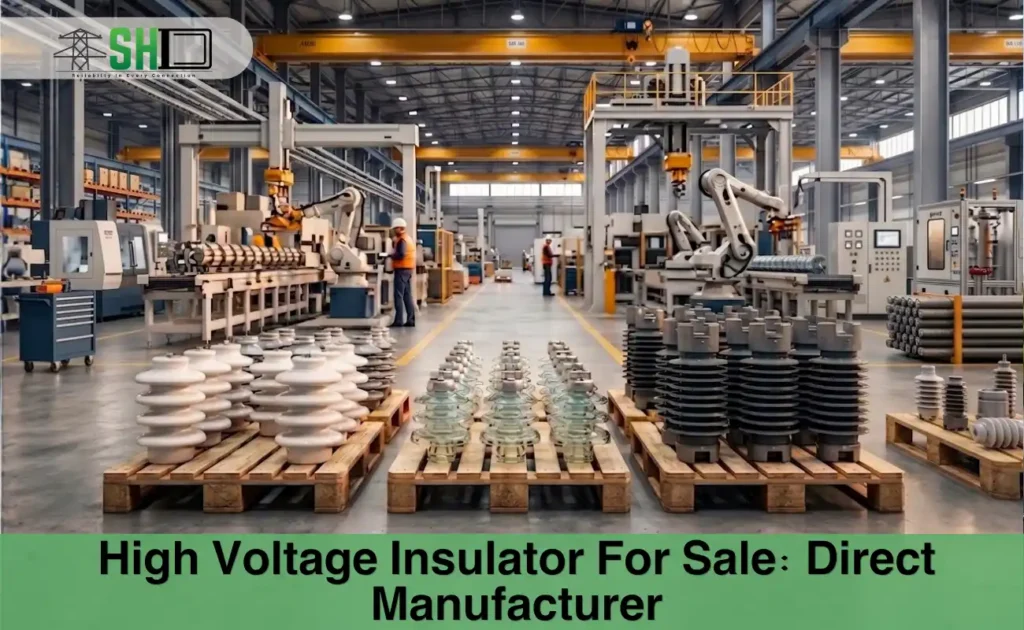
High voltage insulator for sale, these units are essential components designed to support and separate electrical conductors safely from utility poles and transmission towers without letting dangerous electrical currents pass through. When power grids expand or maintenance requires upgrades, finding reliable grid components becomes a top priority for electrical engineers and contractors. High voltage insulators heavy-duty ceramic, glass, or composite polymer devices prevent power loss, withstand extreme weather conditions, and ensure the stable flow of high-voltage electricity across industrial and commercial networks safely.
What Is a High Voltage Insulator?
High Voltage Insulator a special non-conducting device used to support electrical power lines and block electricity from traveling to support towers or the ground. Key materials used include porcelain, glass, and composite polymers.
Read More: Insulators Used in Transmission Lines Explained.
Types of High Voltage Insulators Porcelain, Glass, and Polymer
High voltage electrical insulators are made from three primary materials: porcelain, glass, and polymer. These essential Overhead Line Insulators offer unique mechanical strength, dielectric properties, and environmental resistance characteristics for power transmission and distribution.
Porcelain Insulators
- Composition: Blended ceramic material consisting of kaolin clay, quartz, feldspar, and alumina, protected by a smooth external glaze.
- Dielectric Strength: High voltage porcelain insulators approximately 4 to 10 kV/mm (or up to 60–250 kV/cm depending on purity and glaze).
- Performance: Exceptional compressive load capacity and long-term thermal stability, though prone to cracking unseen internally or higher pollution-induced flashover rates (~1.47 faults per 1,000 units/year in contaminated areas).
Glass Insulators
- Composition: Annealed or toughened electrical-grade glass cast into specialized shapes.
- Dielectric Strength: High breakdown resistance, reaching up to 140 kV/cm.
- Performance: Transparent structure makes physical damage or internal stress instantly visible toughened glass insulators normally self-shatter; demonstrates a lower pollution flashover rate (~0.83 faults per 1,000 units/year) than porcelain.
Polymer (Composite) Insulators
- Composition: Fiberglass-reinforced plastic (FRP) core rod covered by an outer weather-shed housing made of silicone rubber or EPDM.
- Dielectric Strength: High initial surface resistance paired with superior hydrophobic properties that repel moisture.
- Performance: Extremely lightweight and flexible with high pollution and vandalism resistance, though possessing a shorter historical service life record compared to century-old ceramic designs.
Read More: Polymer vs Porcelain Insulator: Key Differences.
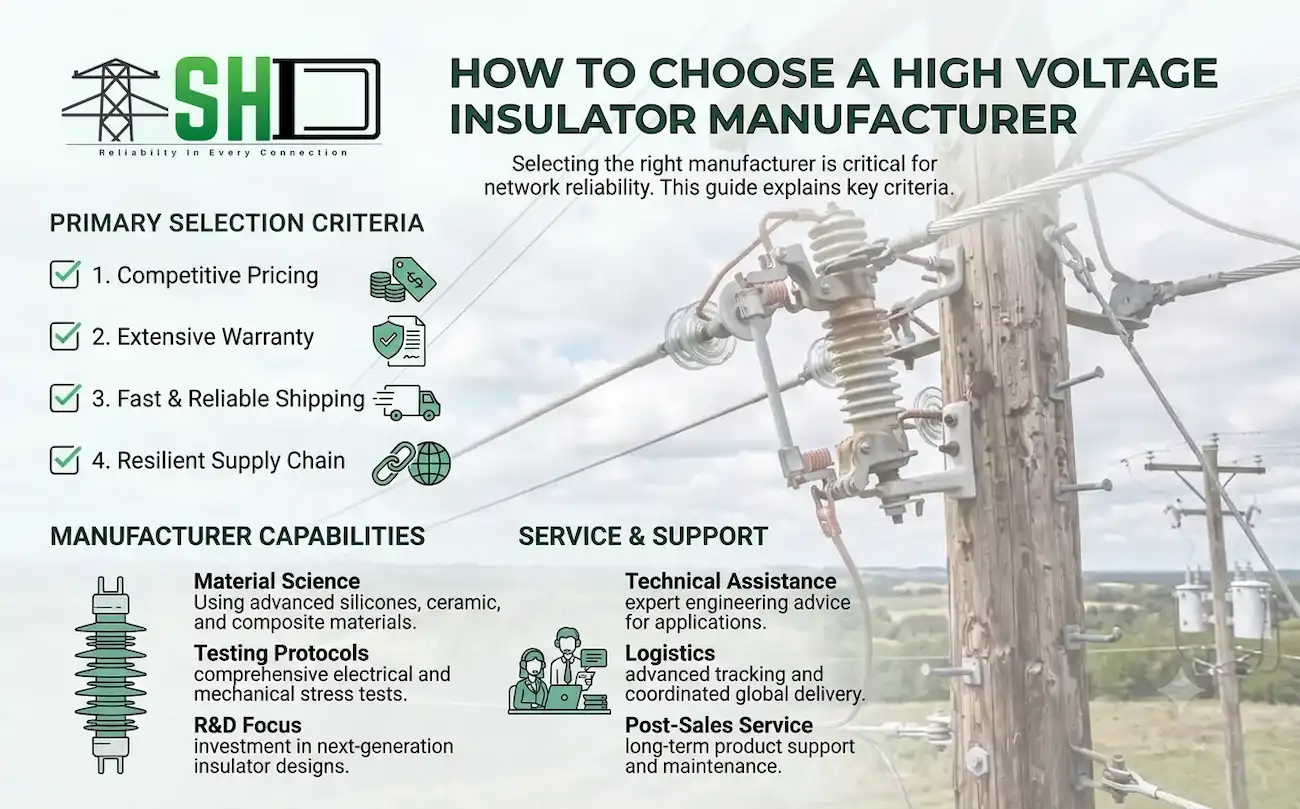
How to Choose a Manufacturer Offering High Voltage Insulator for Sale?
Choosing the right high voltage insulators manufacturers, such as Sihedan, requires careful evaluation. Focus on commercial pricing models, shipping logistics, and compliance standards to ensure reliable project delivery and long-term grid stability.
- Pricing Transparency: Look for clear pricing structures for insulators high voltage without hidden fees for custom tooling, testing reports, or specialized packaging.
- Payment Terms: Assess flexible payment options such as letters of credit (LC) or milestone-based payments that protect your cash flow.
- Warranty Coverage: Verify the length and scope of replacement warranties for high voltage insulator for sale operating under stress.
- Production Capacity: Confirm the manufacturer’s ability to scale production up for large orders without missing deadlines.
- Shipping and Lead Times: Review average delivery windows and geographical shipping proximity to reduce transit times and delays.
- Export Compliance: Ensure the company holds proper international shipping certifications and handles customs documentation smoothly.
- Packaging and Handling: Check if they use heavy-duty, weather-resistant crating to prevent transit damage to fragile porcelain or glass units.
- Supply Chain Stability: Verify that they source raw materials from reliable, certified vendors to avoid unexpected manufacturing halts.
Read More: 11kV Insulator Manufacturers: A Complete Guide to Selection.
Sihedan Guide to High Voltage Insulator Price Factors
High voltage insulator for sale pricing is primarily driven by material composition, voltage class rating, and mechanical load specifications.
- Porcelain and Glass: Traditional, heavier options with high compressive strength; typically range from $12 to $18 for standard 110kV units, offering long-term UV and pollution resistance but higher shipping and handling weights.
- Polymer Composite: Lighter silicone-rubber and fiberglass designs ranging from $10 to $16 for 110kV ratings; preferred in high-pollution zones due to hydrophobicity, though manufacturing complexity can drive baseline costs up.
- Cantilever / Tensile Strength: Ratings of high voltage insulator for sale designed to withstand severe wind loading, conductor weight, or heavy dead-end strain demands require reinforced hardware and thicker cores, scaling up the final price.
- Mechanical Load Capacity: High voltage power line insulators rated for higher tension and cantilever strength require reinforced cores and heavy-duty metal fittings.
- Testing & Certification Compliance: Adherence to international quality standards (such as IEC or ANSI) requires rigorous routine and type testing.
- Customization & Orders: Custom dimensions, specialized coatings, and order volume significantly affect unit manufacturing and shipping prices.
Packaging and Shipping of High Voltage Insulators
Packaging and shipping high voltage insulator for sale require heavy-duty wooden crates, custom foam cushioning, and moisture barriers to prevent catastrophic ceramic or composite cracking and surface contamination during transit.
- Crates and Pallets: Built using treated pine or hardwood plywood boxes reinforced with steel banding to maximize stackability and bear heavy loads.
- Cushioning Support: Individual units are wrapped in high-density polyethylene foam or bubble wrap, with void spaces filled using custom wood blocking or specialized foam inserts to eliminate shifting.
- Moisture and Corrosion Control: Sealed inside heavy plastic wraps containing Vapor Corrosion Inhibitor (VCI) packages and desiccant units to block humidity and salt spray during ocean freight.
- Securement: Fixed rigidly to crate bases with bolts or drawstrings to prevent longitudinal and crosswise shock vibrations.
Why Sihedan is a Trusted Manufacturer for High Voltage Insulator for Sale?
Sihedan is a trusted manufacturer for high voltage insulator for sale and a comprehensive range of Overhead Power Line Hardware, delivering dependable insulation performance, consistent quality control, and responsive support—so your power systems achieve safer, longer-lasting operation with confidence.
- Proven insulation reliability for improved electrical performance and reduced failure risk.
- Consistent manufacturing quality with tight process controls to help ensure uniform product performance.
- Durable, field-ready designs built to withstand demanding grid and industrial environments.
- Material and workmanship focus to support long service life and stable operating characteristics.
- Customizable options to match voltage class, mounting needs, and project requirements.
- Strong quality documentation & testing readiness to support selection, inspection, and procurement.
- Responsive pre-/after-sales support for guidance on specifications, compatibility, and ordering.
- Efficient supply capability to help meet project timelines and ongoing replacement needs.
Ready to upgrade your power network with reliable solutions? Reach out through our Contact Us page, message us directly via WhatsApp, or email us at info@sihedan.com for bulk orders and expert consultations.
FAQs
What certifications should a high voltage insulator manufacturer have?
High voltage insulator manufacturers should hold ISO 9001 for quality management, ISO 14001 for environmental standards, and type test reports from accredited labs like KEMA or CESI verifying electrical and mechanical performance.
What are the typical lead times for bulk high voltage insulator orders?
Typical lead times for bulk high voltage insulator orders range from 8 to 16 weeks for standard porcelain or glass units, while custom composite polymer designs often require 12 to 24 weeks depending on raw material availability.
How do I verify the quality of a high voltage insulator manufacturer?
Verify product quality by reviewing certified test reports for power frequency puncture, dry lightning impulse withstand, cantilever mechanical load failure, and conducting rigorous sample testing like dye penetration and galvanizing thickness checks.
Leave a Reply