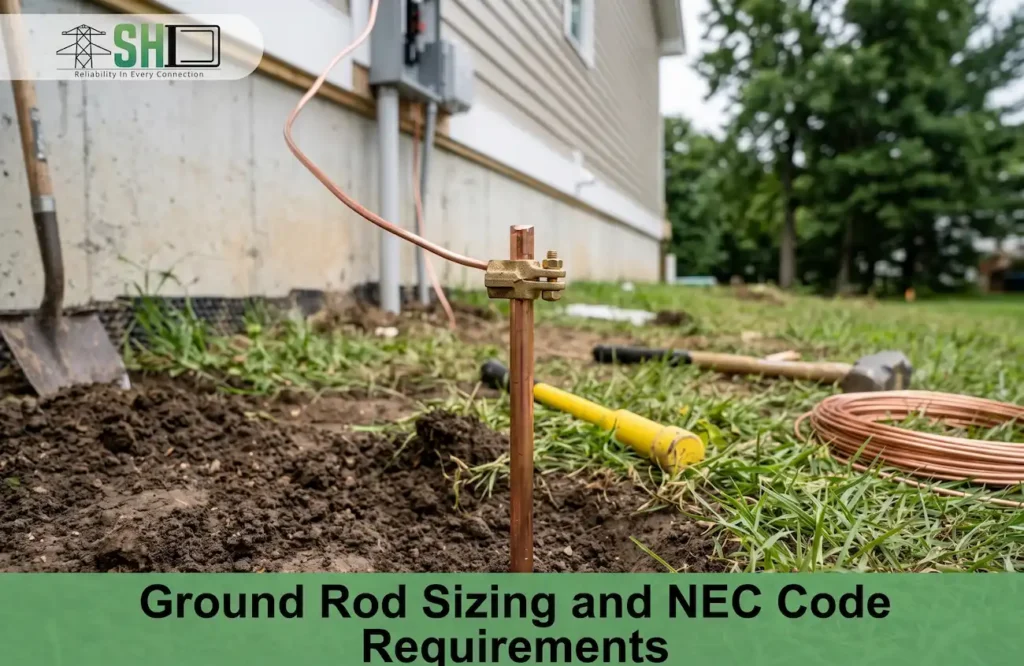
Ground rod sizing is a critical yet frequently overlooked aspect of designing a safe and effective electrical grounding system. Choosing the correct dimensions ensures that your system can safely divert dangerous fault currents and lightning strikes directly into the earth, protecting both structural property and human lives. These ground rod size requirements depend heavily on regional electrical codes, local soil resistivity, and the specific demands of your electrical installation. In this article, we will break down the standard ground rod sizes, explore how environmental factors influence your choice, and provide clear guidelines to help you select the right rod.
What is Ground Rod Sizing in Electrical Systems?
Ground rod sizing in electrical systems refers to the minimum length, diameter, and material requirements for the grounding electrode and the system, as mandated by standards like the National Electrical Code (NEC) to ensure a safe, low-impedance path to the earth during a fault or surge.
Read More: What Does a Ground Rod Do for Grid Safety
NEC Standards for Commercial Grounding Electrodes
National Electrical Code (NEC Article 250) requires commercial and industrial facilities to bond all available on-site electrodes into a single, comprehensive grounding electrode system. The nec ground rod size requirements:
- Metal Underground Water Pipe: Must have at least 10 feet in direct contact with the earth and requires a supplemental electrode.
- Structural Metal: In-ground support structures or building steel in direct vertical contact with the earth for 10 feet or more.
- Concrete-Encased Electrode (Ufer Ground): At least 20 feet of bare copper conductor (minimum 4 AWG) or steel reinforcing bar/rod (minimum 1/2-inch diameter) encased in at least 2 inches of concrete near the bottom of a foundation.
- Ground Ring: At least 20 feet of bare copper conductor (minimum 2 AWG) buried at least 30 inches below grade.
- Rod and Pipe Electrodes: Must be at least 8 feet long; pipes require a minimum 3/4-inch trade size (galvanized), and rods require a minimum 5/8-inch diameter (copper-coated or stainless steel).
- Plate Electrodes: Must expose at least 2 square feet of surface area to the exterior soil and be buried at least 30 inches deep.
Key Factors Affecting Ground Rod Dimensions
The primary factors affecting ground rod dimensions are soil resistivity, required grounding resistance, and fault current capacity. The factors affecting ground rod sizing:
- Soil Resistivity: High-resistance soil requires longer rods to reach moisture-rich, conductive lower layers.
- Target Resistance: Lower target resistance goals (like meeting NEC’s 25-ohm rule) demand longer or thicker rods.
- Mechanical Strength: Hard, rocky, or compacted soil requires thicker diameters to prevent bending during installation.
- Electrical Load: High fault currents or lightning risks require greater surface area (longer/thicker rods) to dissipate energy safely.
- Corrosion Risk: Aggressive chemical soils necessitate thicker rods or specialized materials to ensure a long operational life.
- Regulatory Codes: Standards like the National Electrical Code (NEC) dictate ground rod minimum size (e.g., minimum 8 feet in length).
Step-by-Step Guide for Accurate Ground Rod Sizing
Step-by-step guide for how to size a ground rod based on standard electrical codes (NEC 250.52). The minimum standard size for a ground rod is 5/8 inch in diameter and 8 feet in length for most residential and commercial services:
- Determine Length and Depth: Use a ground rod that is at least 8 feet (2.4 meters) long to ensure deep contact with permanent moisture in the soil. Drive the rod straight down so the top sits flush with or at least 2 inches below the finished ground level.
- Select the Diameter and Material: Choose a 5/8-inch diameter for copper-clad steel or galvanized iron rods, though 1/2-inch copper-coated steel is acceptable if it meets UL listings.
- Assess Soil Resistivity: Test your site’s soil resistivity (ρ, measured in ohm-meters). Rocky, sandy, or dry granite soils have very high resistivity, so measure the value practically on-site.
- Size the Grounding Electrode Conductor (GEC): Size the connecting wire running from your electrical panel to the rod using NEC Table 250.66 based on your service entrance conductor size.
- Verify Resistance Targets: Aim for a ground resistance of 25 ohms or less for a single rod per NEC 250.56. If resistance remains above 25 ohms, install a second rod.
- Space Supplementary Rods: Separate multiple rods by at least their driven length (typically 6 to 10 feet apart) to prevent overlapping electrical spheres of influence.
- Secure Connections: Attach the GEC using a heavy-duty, corrosion-resistant grounding clamp approved for direct burial.
- Ground rod sizing calculator: Ground resistance (R) for a single driven rod is estimated using Dwight’s formula:

Read More: Main Components of Overhead Transmission Lines
Ground Rod Dimensions vs Grounding Conductor Size
A ground rod does not need a larger grounding electrode conductor (GEC) than 6 AWG copper or 4 AWG aluminum, no matter how large the service is. Ground Rod Dimensions vs. Minimum Grounding Conductor Size
| Ground Rod Diameter | Ground Rod Minimum Length | Minimum Copper Conductor Size (GEC) | Minimum Aluminum Conductor Size (GEC) |
| 1/2 inch (12.7 mm) | 8 feet (2.44 m) | 6 AWG | 4 AWG |
| 5/8 inch (15.875 mm) | 8 feet (2.44 m) | 6 AWG | 4 AWG |
| 3/4 inch (19.05 mm) | 8 feet (2.44 m) | 6 AWG | 4 AWG |
The Costs of Commercial Copper-Bonded Ground Rods
Commercial copper-bonded ground rods typically cost between $12 and $80.57 per single rod, depending on length, diameter, and copper thickness.
- Single Rods: Standard 8-foot commercial/residential copper-bonded rods range from $12 to $80.57 per unit. Wholesale or bulk factory prices can be lower (1.50–6.20).
- Larger/Specialty Sizes: 10-foot to 12-foot or thicker rods (such as 5/8-inch or 1-inch diameters) range from $40 to over $112.
- Kits: Packages including 3 rods, clamps, and wire generally run $45 to $65.
- Installation Labor: Professional installation adds $120 to $200, which includes soil testing and resistance verification. DIY labor is free, though renting a post-hole driver costs $25 to $50.
Secure Your Energy Projects with Sihedan Grounding Parts
Sihedan provides premium Overhead Power Line Hardware alongside high-quality Grounding and Bonding products such as Ground Plate, Copper Bonded Earth Rod, and Earth Rod Coupling, ensuring maximum safety, reliability, and long-term performance to secure your vital energy infrastructure projects worldwide.
- Unmatched Reliability: Our grounding parts resist corrosion and withstand extreme weather to ensure long-term grid stability.
- Superior Safety Standards: We manufacture products that prevent electrical faults, protecting both your equipment and field personnel.
- Engineering Precision: Every component is built to exact industry specifications for seamless integration into complex energy projects.
Ensure absolute grid safety with our certified grounding solutions. For direct factory pricing and custom OEM specifications, visit our Contact Us page, reach out via WhatsApp, or email info@sihedan.com.
FAQs
Is a 4-Foot Installation Deep Enough for Grounding?
No. Ground rods must be at least 8 feet deep into the soil to meet code requirements and ensure safety.
Can You Legally Use Steel Rebar as a Ground Rod?
Yes, legally, but with restrictions. The NEC allows steel rebar (Ufer ground) encased in concrete, but bare rebar cannot replace standard driven ground rods.
Can a Ground Rod Be Completely Buried Underground?
Yes, it can be completely buried. The NEC allows the top of the rod to be flush with or below ground level for protection.
How Does Soil Resistivity Affect Ground Rod Sizing?
Higher soil resistivity requires larger or multiple ground rods. Low-resistance soil dissipates electricity faster, while dry, rocky soil needs deeper or additional rods.
Leave a Reply